Tell us about the job
Takes about a minute. No obligation.
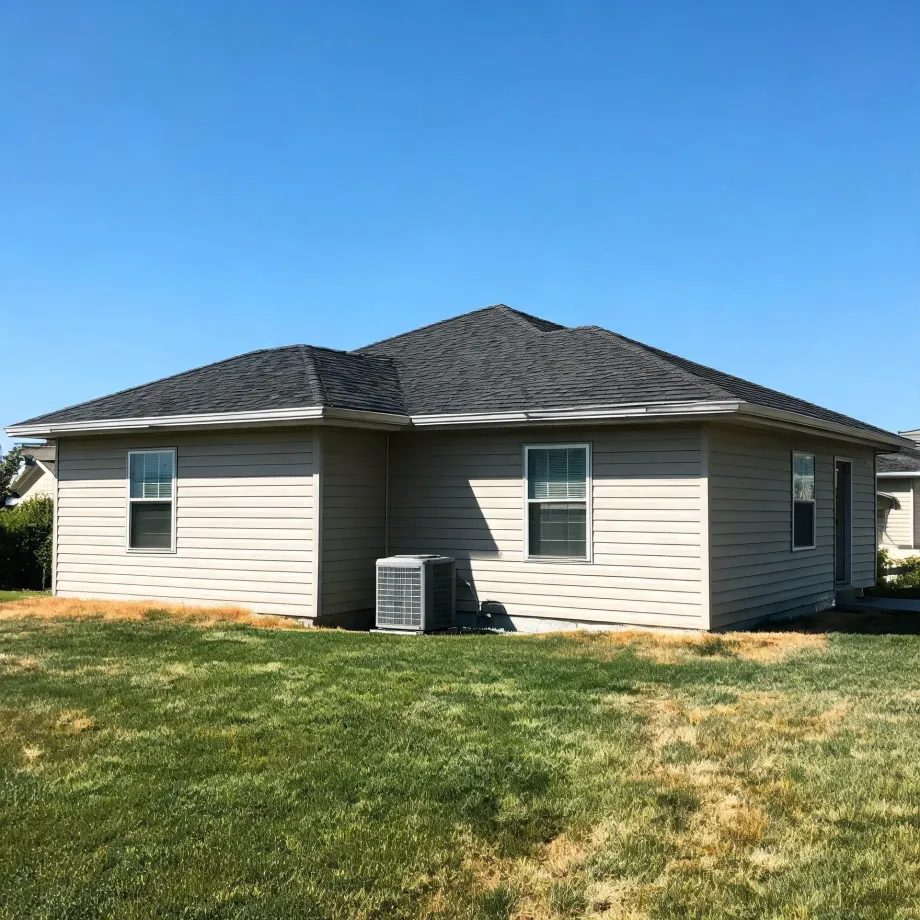
Central AC repair in this area starts with the compressor and the contactor, because those are the parts that carry the full load of every cooling cycle the system runs. Homes in Southeastern Connecticut Planning Region, CT run cooling about two months a year, from July through August. The compressor starts and stops repeatedly across that span, and the contactor closes every time it does. By the time a homeowner notices a problem, often on the first genuinely hot day of the year, the fault has been building since the previous season ended. A contractor diagnosing the unit will check those two components before anything else, and the condition they find there tells them whether the repair is straightforward or whether the refrigerant circuit needs attention too.
Ductwork laid down for one generation of cooling equipment carries assumptions about airflow and load that do not match what runs through it now. When a contractor opens a central AC unit here and finds a fault, the next question is whether that fault belongs to the equipment alone or whether the distribution system around it is part of what failed. Half the homes in Southeastern Connecticut Planning Region, Connecticut were built in 1969 or earlier (2020-2024 ACS 5-year). That depth of housing stock means the duct runs, the returns, and the connections a contractor traces back from the unit were not designed around it, and a repair scoped only to the equipment may leave the underlying pressure problem in place.
The Parts of a Central AC a Contractor Checks First
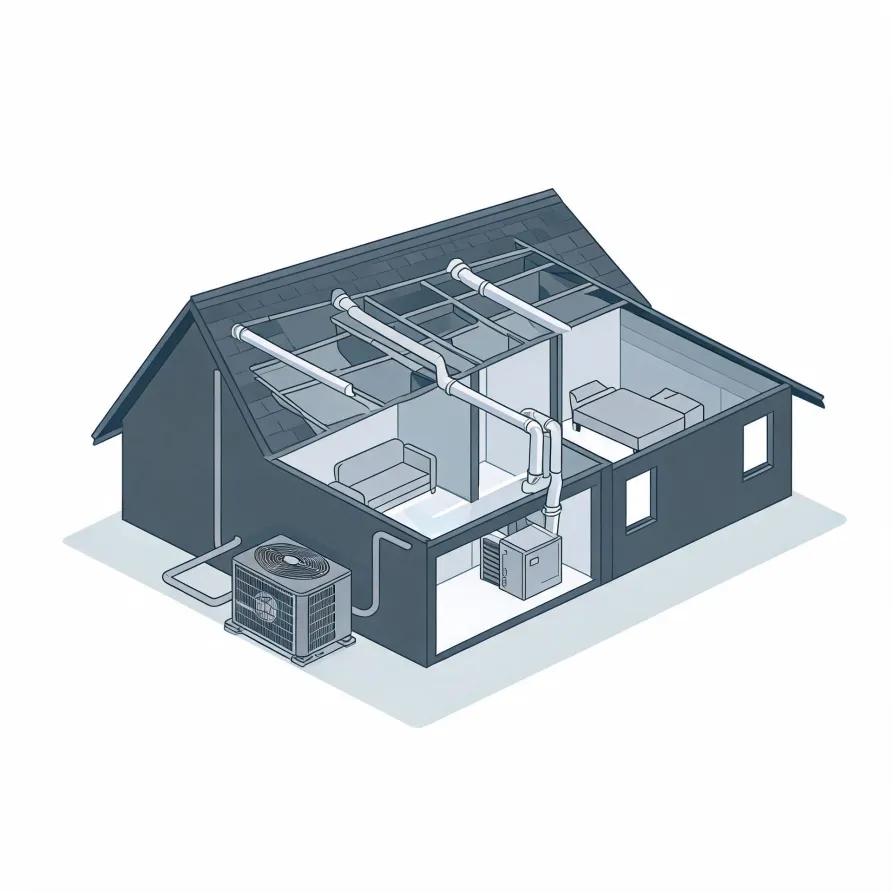
The outdoor condenser unit sits outside the house and carries the components most likely to be the source of a problem: the compressor, the condenser coil, and the fan. When the system runs but does not cool, or shuts off too soon, a contractor starts here. A failed compressor or a clogged condenser coil will show up fast on inspection.
Inside the house, the air handler holds the evaporator coil and the blower. The evaporator coil is where refrigerant does its work, and a leak or a frozen coil there produces symptoms the blower makes obvious. The refrigerant lines that connect the two units and the expansion valve that controls refrigerant flow are also points a contractor examines when the outdoor unit checks out fine.
The drawing shows the general layout of a central AC system, and a licensed contractor determines which parts apply and what condition they are in for your specific home.
Find a contractor in Southeastern Connecticut Planning RegionSoutheastern Connecticut by the Numbers
Half the homes in Southeastern Connecticut Planning Region, Connecticut were built in 1969 or earlier (2020-2024 ACS 5-year).
U.S. Census Bureau, 2020-2024 American Community Survey 5-Year EstimatesSoutheastern Connecticut Planning Region, Connecticut holds 126,425 housing units (2020-2024 ACS 5-year).
U.S. Census Bureau, 2020-2024 American Community Survey 5-Year EstimatesOwners occupy 65.1% of the occupied homes in Southeastern Connecticut Planning Region, Connecticut (2020-2024 ACS 5-year).
U.S. Census Bureau, 2020-2024 American Community Survey 5-Year EstimatesCodes & Standards for Central AC Repair in Southeastern Connecticut Planning Region, Connecticut9 sourced rules and standards
What HVAC Repair Looks Like in Southeastern Connecticut
Split-system central air conditioners rated below 45,000 Btu/h manufactured on or after January 1, 2023 must meet a federal minimum of 13.4 SEER2.
Split-system central air conditioners rated at or above 45,000 Btu/h manufactured on or after January 1, 2023 must meet a federal minimum of 13.4 SEER2.
Split-system central air conditioners manufactured between January 1, 2015 and December 31, 2022 had to meet 13 SEER, the metric that preceded SEER2.
Single-package central air conditioners manufactured on or after January 1, 2023 must meet a federal minimum of 13.4 SEER2.
Space-constrained central air conditioners manufactured on or after January 1, 2023 must meet a federal minimum of 11.7 SEER2.
Federal efficiency standards for split-system central air conditioners and heat pumps are set on each certified combination of outdoor unit and indoor coil rather than on the outdoor unit alone.
Residential and light commercial air conditioning and heat pump systems assembled in the field, including mini-splits and unitary systems, may not be installed on or after January 1, 2025 using a refrigerant with a global warming potential above 700.
A field-assembled system whose specified components were all manufactured or imported before January 1, 2025 carries no installation compliance date under the refrigerant restrictions and may still be installed.
Licensing Rules for HVAC Repair in Southeastern Connecticut Planning Region, Connecticut
Connecticut requires a state licence to perform, or to advertise, heating, piping and cooling work: no person may practise an occupation this chapter covers without first obtaining one.