Tell us about the job
Takes about a minute. No obligation.
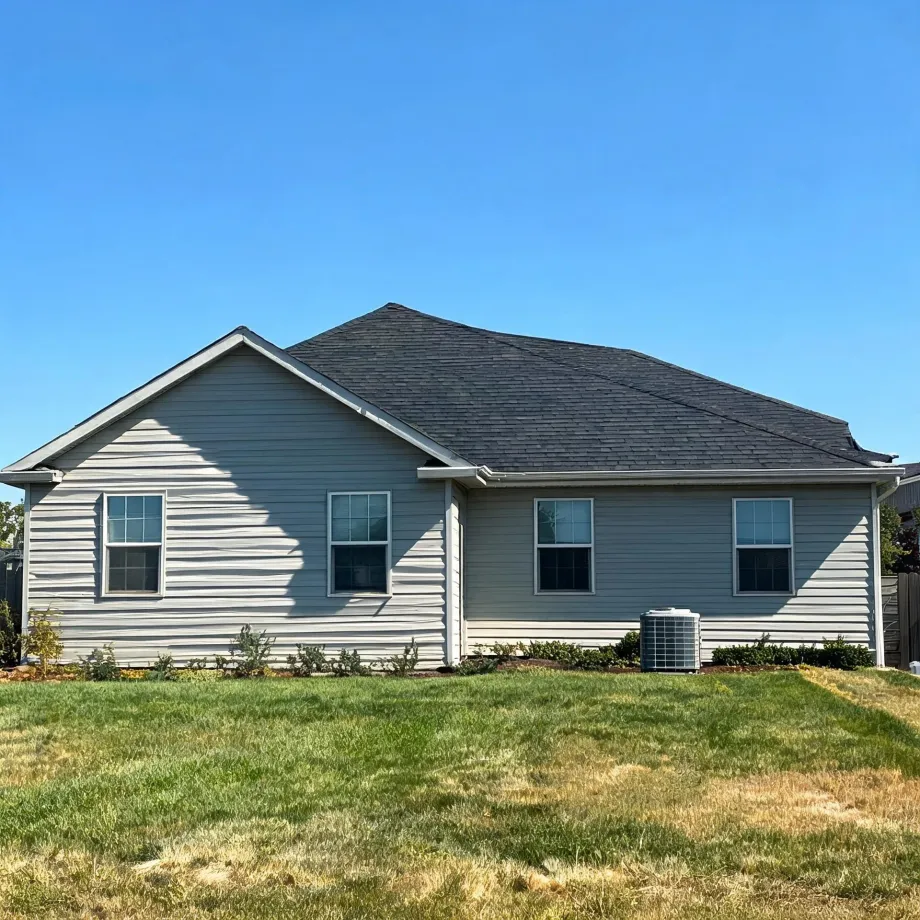
A contractor quoting a central AC repair here starts with the install and the service history, because the compressor and contactor have had little chance to wear out on sheer hours alone. Homes in Northeastern Connecticut Planning Region, CT run cooling about two months a year, from July through August. Components that fail inside a short season tend to point at a refrigerant charge that was never right, a contactor that was already pitted, or airflow restricted by a coil that went uncleaned. The condenser fan and the electrical side of the system are where a technician looks first.
Ductwork put in decades ago to carry a different system has usually been adapted and re-adapted by the time a repair call comes in, but that is the house. What decides the repair is what a contractor pulls out of the unit itself. Half the homes in Northeastern Connecticut Planning Region, Connecticut were built in 1973 or earlier (2020-2024 ACS 5-year). Equipment running in stock this old may be well past the point where its compressor, capacitor, or control board has a current part number. A contractor working a repair here spends real time on parts availability, and what they find in the supply chain shapes what they quote as much as what they find in the cabinet.
The Parts of a Central AC a Contractor Checks First
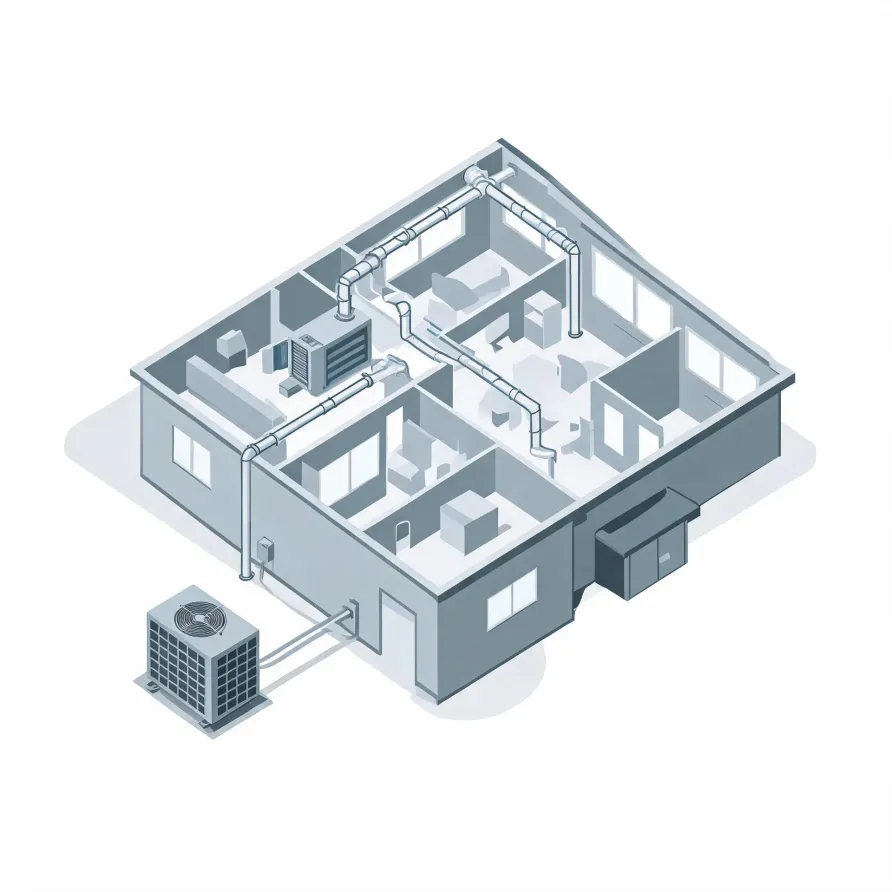
The outdoor condenser unit sits outside the house, usually on a concrete pad along an exterior wall, and it carries the compressor and the condenser coil. Both are common sources of failure. A compressor that has seized, a coil that is fouled or damaged, or a refrigerant leak at the outdoor unit are among the first things a contractor will look at when a system stops cooling.
Inside the house, the air handler holds the evaporator coil and the blower. The evaporator coil is where the cooling happens, and a frozen or leaking coil points straight to it. The blower moves conditioned air into the duct system, and a failed motor or a clogged wheel will cut airflow across the whole house. The expansion valve and the refrigerant lines that connect the two units round out the core of the system.
The drawing shows the general layout of a central AC system, and a licensed contractor determines which parts apply to your specific house and situation.
Find a contractor in Northeastern Connecticut Planning RegionNortheastern Connecticut Planning Region, by the numbers
Half the homes in Northeastern Connecticut Planning Region, Connecticut were built in 1973 or earlier (2020-2024 ACS 5-year).
U.S. Census Bureau, 2020-2024 American Community Survey 5-Year EstimatesNortheastern Connecticut Planning Region, Connecticut holds 41,736 housing units (2020-2024 ACS 5-year).
U.S. Census Bureau, 2020-2024 American Community Survey 5-Year EstimatesOwners occupy 77.3% of the occupied homes in Northeastern Connecticut Planning Region, Connecticut (2020-2024 ACS 5-year).
U.S. Census Bureau, 2020-2024 American Community Survey 5-Year EstimatesCodes & Standards Governing Central AC Repair in Northeastern Connecticut Planning Region, Connecticut9 sourced rules and standards
What HVAC Repair Looks Like in Northeastern Connecticut
Split-system central air conditioners rated below 45,000 Btu/h manufactured on or after January 1, 2023 must meet a federal minimum of 13.4 SEER2.
Split-system central air conditioners rated at or above 45,000 Btu/h manufactured on or after January 1, 2023 must meet a federal minimum of 13.4 SEER2.
Split-system central air conditioners manufactured between January 1, 2015 and December 31, 2022 had to meet 13 SEER, the metric that preceded SEER2.
Single-package central air conditioners manufactured on or after January 1, 2023 must meet a federal minimum of 13.4 SEER2.
Space-constrained central air conditioners manufactured on or after January 1, 2023 must meet a federal minimum of 11.7 SEER2.
Federal efficiency standards for split-system central air conditioners and heat pumps are set on each certified combination of outdoor unit and indoor coil rather than on the outdoor unit alone.
Residential and light commercial air conditioning and heat pump systems assembled in the field, including mini-splits and unitary systems, may not be installed on or after January 1, 2025 using a refrigerant with a global warming potential above 700.
A field-assembled system whose specified components were all manufactured or imported before January 1, 2025 carries no installation compliance date under the refrigerant restrictions and may still be installed.
Licensing Rules for HVAC Repair in Northeastern Connecticut Planning Region, Connecticut
Connecticut requires a state licence to perform, or to advertise, heating, piping and cooling work: no person may practise an occupation this chapter covers without first obtaining one.