Tell us about the job
Takes about a minute. No obligation.
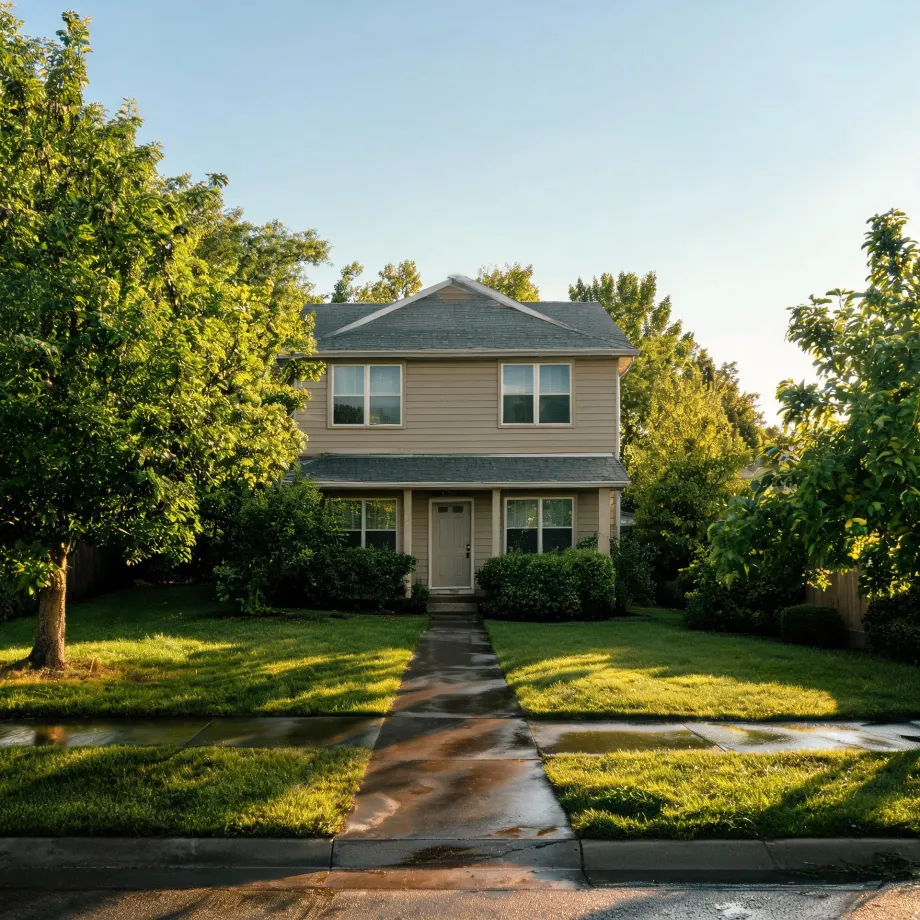
A contractor quoting central AC here has to size the system for a short, concentrated cooling load rather than a long one that reveals problems gradually. Homes in Capitol Planning Region, CT run cooling about two months a year, from July through August. The compressor starts and stops across a narrow window, and if the system is undersized or the refrigerant charge is off at installation, there is not enough runtime across the summer for the fault to surface before the season ends. By the time the next July arrives, that compressor has been sitting idle with an unresolved problem for months. A careful load calculation and a properly commissioned install are what prevent a homeowner from discovering the mistake at the worst possible moment.
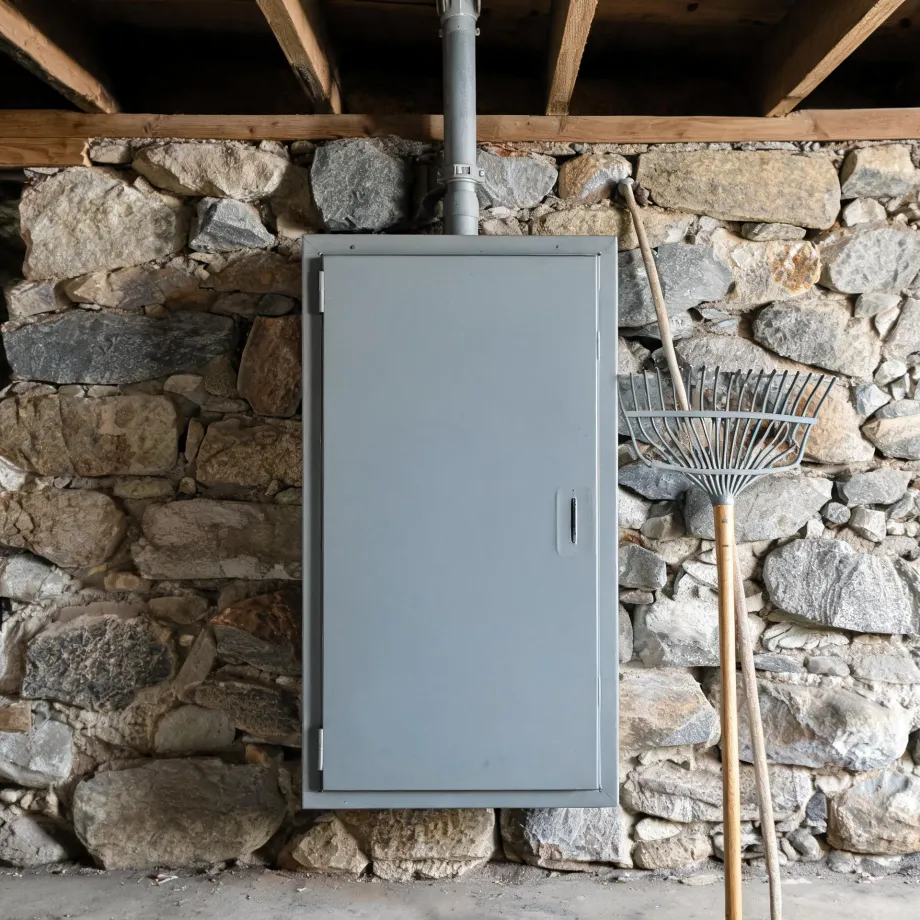
Ductwork in a house this age was designed around whatever system ran first, and central AC places different demands on it than what those ducts were originally built to move. Half the homes in Capitol Planning Region, Connecticut were built in 1966 or earlier (2020-2024 ACS 5-year). A contractor installing a new system here checks whether the existing trunk lines and branch runs can carry the airflow a modern unit delivers, and whether the electrical service has the capacity the new equipment draws. If the ductwork falls short, the install expands before the equipment is ever ordered.
What Gets Installed With a New Central AC
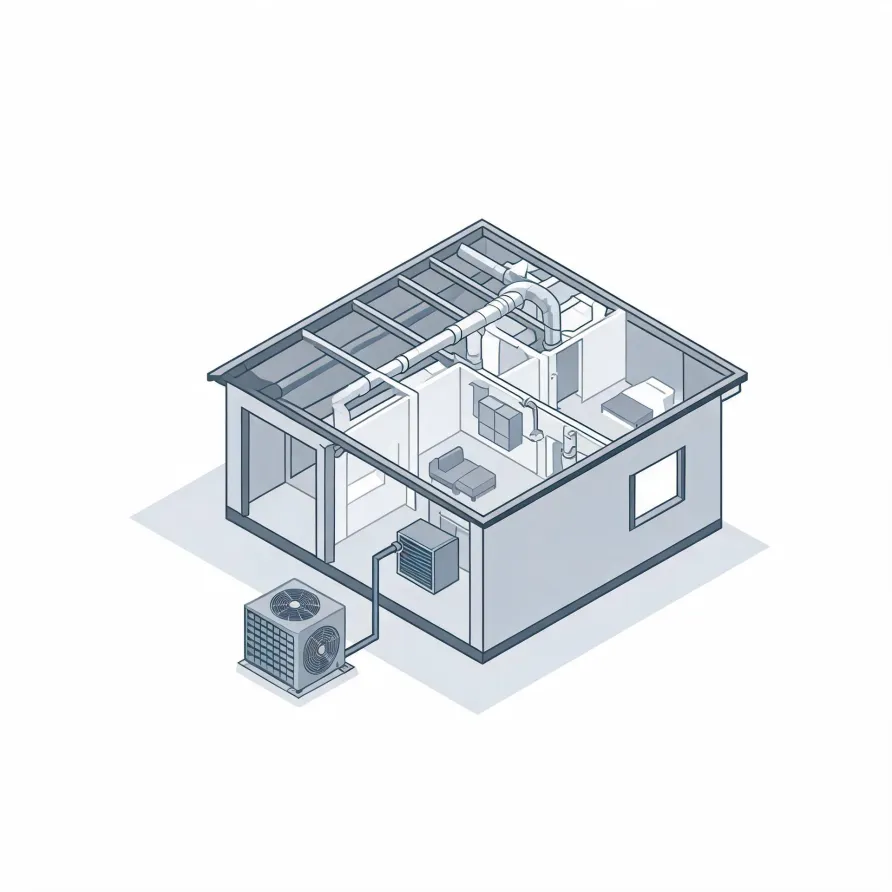
The outdoor unit, called the condenser, sits outside the house on a concrete pad and holds the compressor and condenser coil. Inside, the air handler mounts in a utility space, basement, or closet and contains the evaporator coil and blower. Together these two units form the core of what a contractor installs.
The thermostat goes on an interior wall where it reads the air temperature and signals the system when to run. A condensate drain line runs from the air handler to a nearby drain, carrying away moisture that collects on the evaporator coil during operation.
The drawing shows a typical layout, and a licensed contractor determines what applies to your specific house.
Find a contractor in Capitol Planning RegionCapitol Planning Region, Connecticut, by the numbers
Half the homes in Capitol Planning Region, Connecticut were built in 1966 or earlier (2020-2024 ACS 5-year).
U.S. Census Bureau, 2020-2024 American Community Survey 5-Year EstimatesCapitol Planning Region, Connecticut holds 416,559 housing units (2020-2024 ACS 5-year).
U.S. Census Bureau, 2020-2024 American Community Survey 5-Year EstimatesOwners occupy 65.7% of the occupied homes in Capitol Planning Region, Connecticut (2020-2024 ACS 5-year).
U.S. Census Bureau, 2020-2024 American Community Survey 5-Year EstimatesCodes & Standards Governing Central AC Installation in Capitol Planning Region, Connecticut9 sourced rules and standards
What HVAC Installation Looks Like in Capitol Planning Region
Split-system central air conditioners rated below 45,000 Btu/h manufactured on or after January 1, 2023 must meet a federal minimum of 13.4 SEER2.
Split-system central air conditioners rated at or above 45,000 Btu/h manufactured on or after January 1, 2023 must meet a federal minimum of 13.4 SEER2.
Split-system central air conditioners manufactured between January 1, 2015 and December 31, 2022 had to meet 13 SEER, the metric that preceded SEER2.
Single-package central air conditioners manufactured on or after January 1, 2023 must meet a federal minimum of 13.4 SEER2.
Space-constrained central air conditioners manufactured on or after January 1, 2023 must meet a federal minimum of 11.7 SEER2.
Federal efficiency standards for split-system central air conditioners and heat pumps are set on each certified combination of outdoor unit and indoor coil rather than on the outdoor unit alone.
Residential and light commercial air conditioning and heat pump systems assembled in the field, including mini-splits and unitary systems, may not be installed on or after January 1, 2025 using a refrigerant with a global warming potential above 700.
A field-assembled system whose specified components were all manufactured or imported before January 1, 2025 carries no installation compliance date under the refrigerant restrictions and may still be installed.
Licensing and Legal Requirements in Capitol Planning Region, Connecticut
Connecticut requires a state licence to perform, or to advertise, heating, piping and cooling work: no person may practise an occupation this chapter covers without first obtaining one.