Tell us about the job
Takes about a minute. No obligation.

A compressor that runs for a short, concentrated stretch and then sits cold for most of the year tends to fail at startup, not midseason. Homes in Naugatuck Valley Planning Region, CT run cooling about two months a year, from July through August. The contactor and capacitor take the hardest hit, because every start-of-season call for cooling puts the full starting load on parts that have been sitting dormant. When a contractor opens a unit here, worn contacts and a weakened capacitor are the first things they check, ahead of refrigerant charge or coil condition.
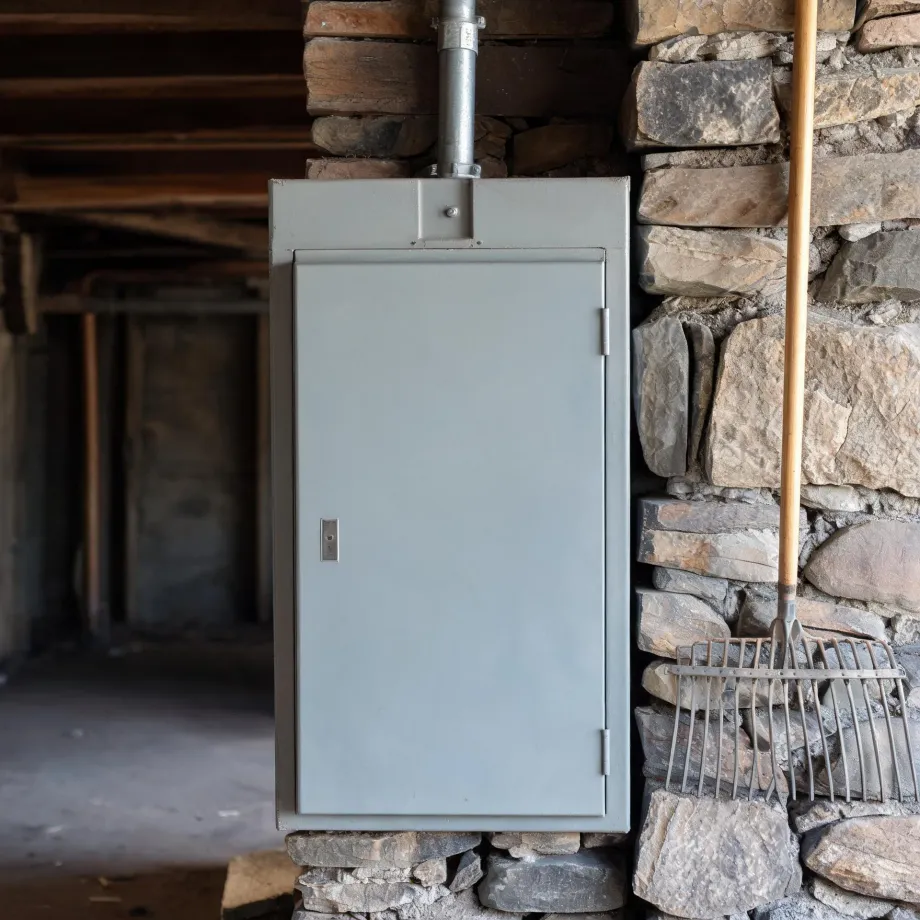
Ductwork in a house this old has usually been through at least one prior system, and the central AC unit a contractor opens today is not the one the house was built around. What matters in a repair call is what the opened unit actually requires: specific capacitors, contactors, control boards, or refrigerant that a system of this age depends on, some of which are no longer in regular production. Half the homes in Naugatuck Valley Planning Region, Connecticut were built in 1969 or earlier (2020-2024 ACS 5-year). That gap between when the house was built and what runs in it now is why a repair quote here sometimes comes back with a parts-availability answer rather than a labor one.
The Parts of a Central AC a Contractor Checks First
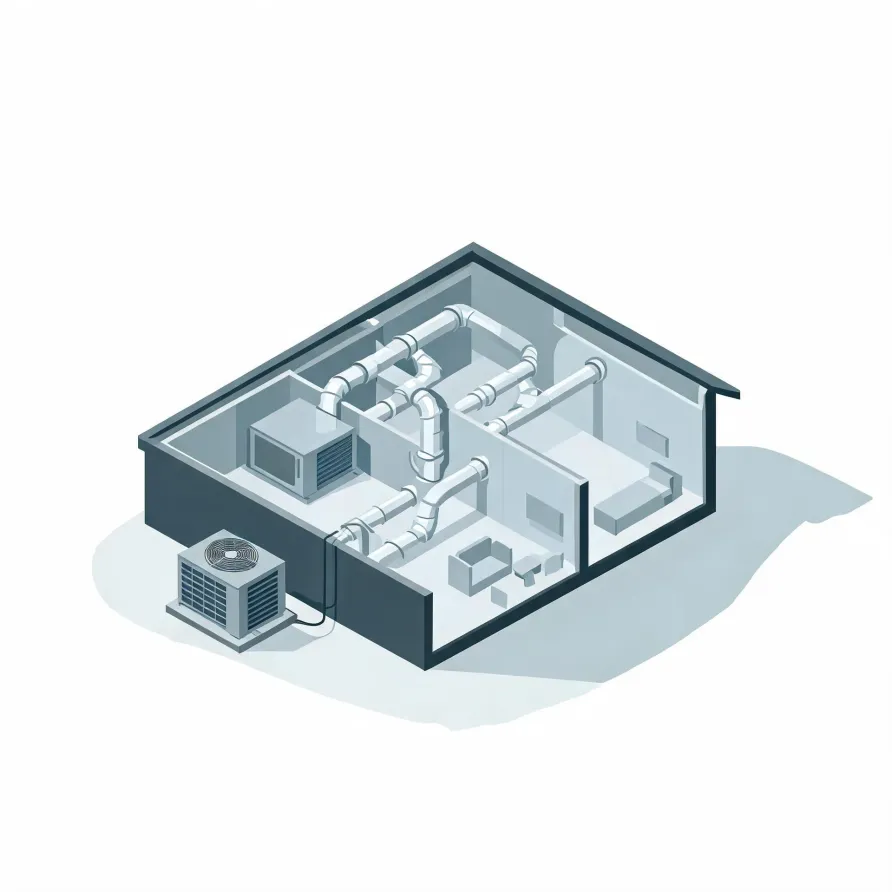
The outdoor condenser unit sits outside the house and holds the compressor and condenser coil, the two components a contractor reaches for first when a system stops cooling. The compressor is the heart of the refrigerant circuit, and a failed one is often the reason a system runs but produces no cold air. The condenser coil, wrapped around the unit's exterior, sheds heat to the outside, and a dirty or damaged coil puts strain on everything else.
Inside the house, the air handler or furnace cabinet holds the evaporator coil and the blower. The evaporator coil sits above the furnace or inside a dedicated cabinet in a closet or utility room, and a frozen or leaking coil shows up as warm air or water around the unit. The blower moves conditioned air through the house, and a failing motor makes itself known through weak airflow or noise.
The drawing shows a typical layout, and a licensed contractor determines what applies to this particular house and system.
Find a contractor in Naugatuck Valley Planning RegionNaugatuck Valley by the Numbers
Half the homes in Naugatuck Valley Planning Region, Connecticut were built in 1969 or earlier (2020-2024 ACS 5-year).
U.S. Census Bureau, 2020-2024 American Community Survey 5-Year EstimatesNaugatuck Valley Planning Region, Connecticut holds 192,551 housing units (2020-2024 ACS 5-year).
U.S. Census Bureau, 2020-2024 American Community Survey 5-Year EstimatesOwners occupy 68.6% of the occupied homes in Naugatuck Valley Planning Region, Connecticut (2020-2024 ACS 5-year).
U.S. Census Bureau, 2020-2024 American Community Survey 5-Year EstimatesCentral AC Repair Rules for Naugatuck Valley Planning Region, Connecticut9 sourced standards and codes
What HVAC Repair Looks Like in Naugatuck Valley
Split-system central air conditioners rated below 45,000 Btu/h manufactured on or after January 1, 2023 must meet a federal minimum of 13.4 SEER2.
Split-system central air conditioners rated at or above 45,000 Btu/h manufactured on or after January 1, 2023 must meet a federal minimum of 13.4 SEER2.
Split-system central air conditioners manufactured between January 1, 2015 and December 31, 2022 had to meet 13 SEER, the metric that preceded SEER2.
Single-package central air conditioners manufactured on or after January 1, 2023 must meet a federal minimum of 13.4 SEER2.
Space-constrained central air conditioners manufactured on or after January 1, 2023 must meet a federal minimum of 11.7 SEER2.
Federal efficiency standards for split-system central air conditioners and heat pumps are set on each certified combination of outdoor unit and indoor coil rather than on the outdoor unit alone.
Residential and light commercial air conditioning and heat pump systems assembled in the field, including mini-splits and unitary systems, may not be installed on or after January 1, 2025 using a refrigerant with a global warming potential above 700.
A field-assembled system whose specified components were all manufactured or imported before January 1, 2025 carries no installation compliance date under the refrigerant restrictions and may still be installed.
Licensing Rules for HVAC Repair in Naugatuck Valley Planning Region, Connecticut
Connecticut requires a state licence to perform, or to advertise, heating, piping and cooling work: no person may practise an occupation this chapter covers without first obtaining one.