

Why your AC smells like burning in Connecticut

Step 1 of 3: Equipment

Why does my AC smell like it's burning?

A burning smell from your AC is one of those things you notice right away, especially when you're running it nonstop to keep everyone comfortable through a Connecticut summer. It's not a smell you want to ignore, and it's fair to wonder if it's something minor or something that means the system needs to be shut off and looked at.

Usually a motor or electrical part overheating

A burning smell almost always points to something electrical. It could be a blower motor straining and overheating, a capacitor failing, or wiring and connections that have worn down enough to heat up when the system runs. Dust burning off a component after the system sat idle smells different, more like a dusty smell that fades after a few minutes. A true burning odor that lingers means a part is overheating right now. With Connecticut power rates among the highest in the country, a motor working harder than it should isn't just a safety concern, it's running up your bill while it struggles. If you smell burning, shut the system off at the thermostat or breaker and have it looked at before running it again.

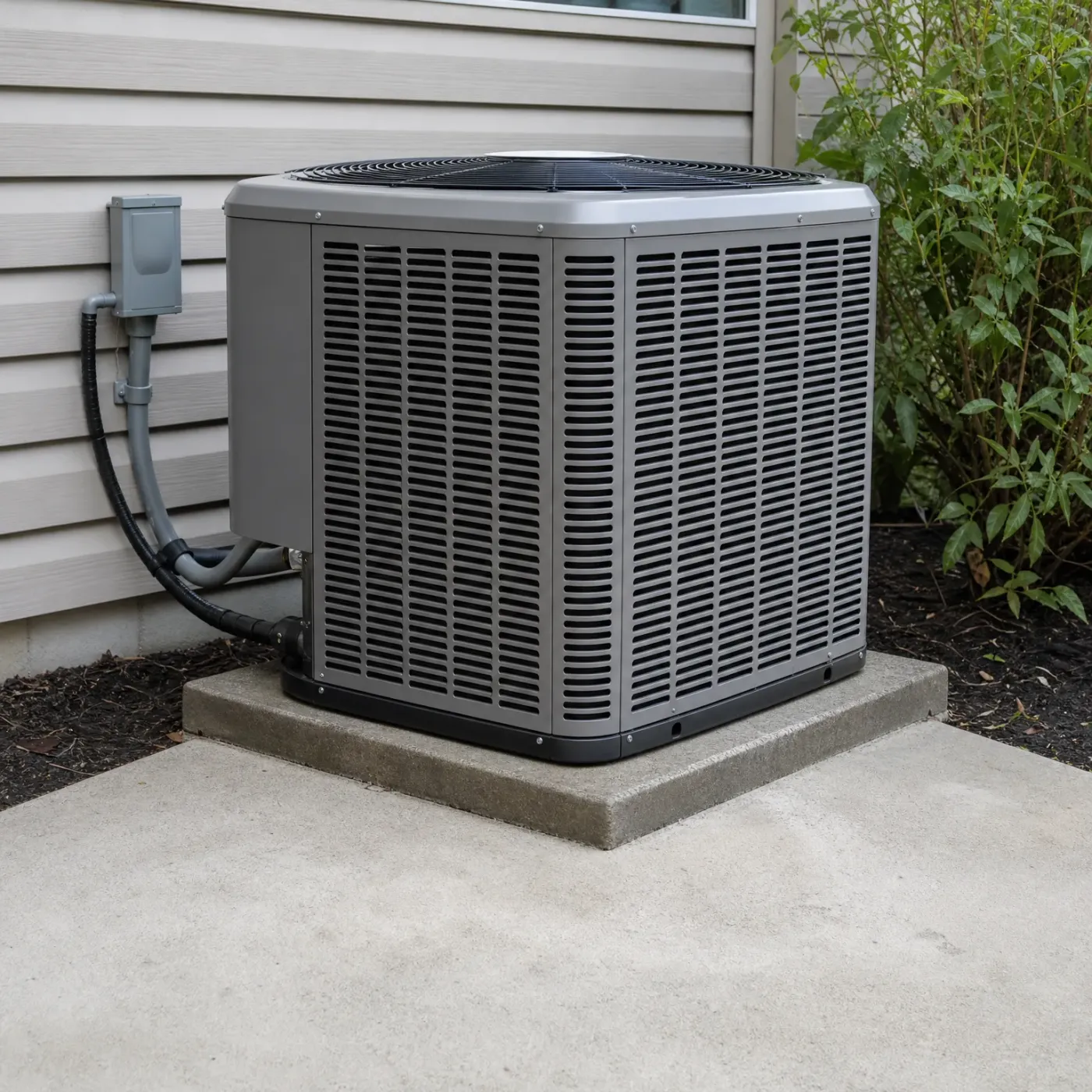
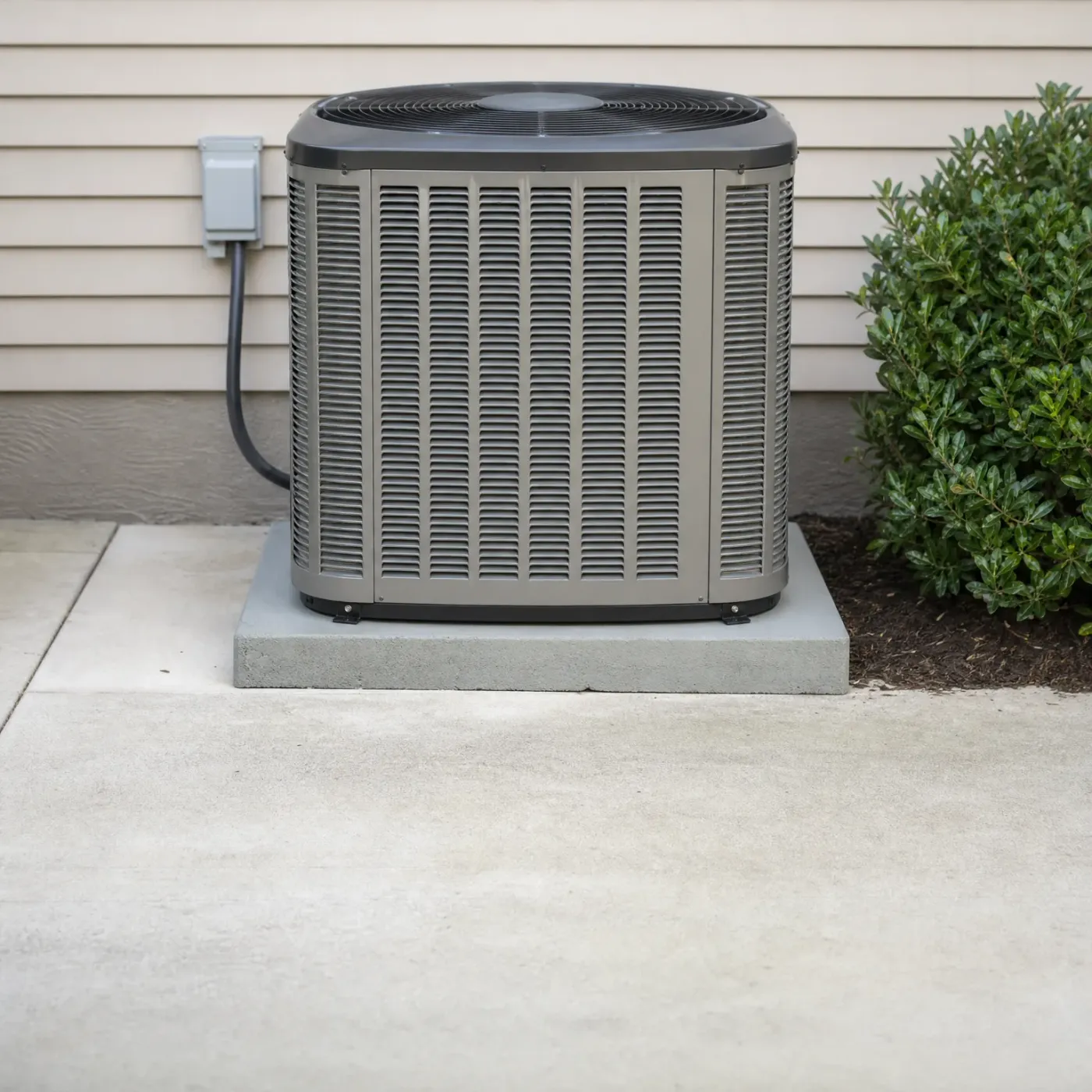
A gray outdoor air conditioning condenser unit on a concrete pad beside a house with horizontal gray siding, with a wall-mounted electrical disconnect box and insulated refrigerant lines, and blue hydrangeas in a mulched bed to the left.

Running clean

A healthy condenser sits outside with its fins clear and its fan spinning freely. Air moves through it the way it should, so the motor and wiring underneath don't have to work past what they're built for. No smell, just the hum you expect on a hot day.


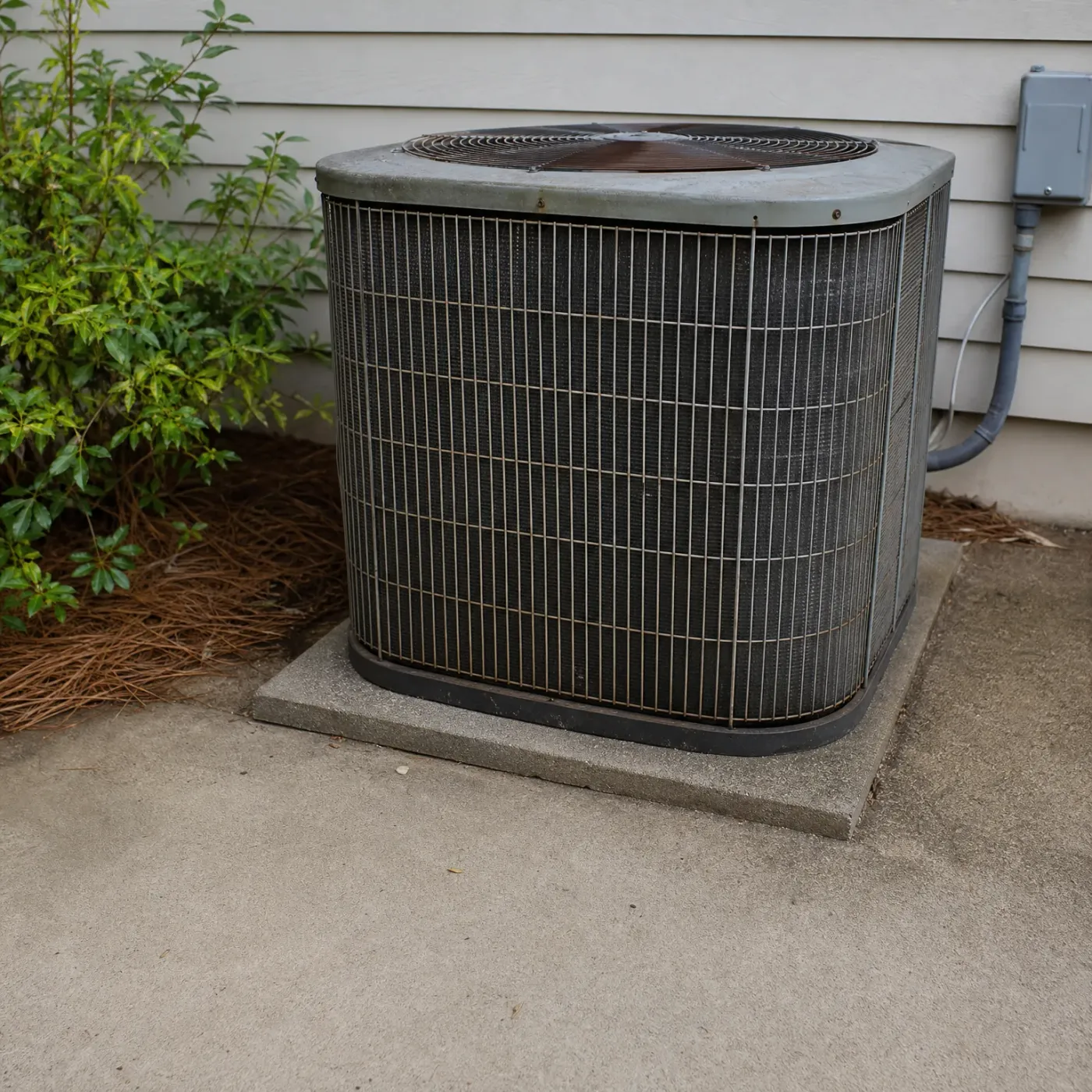
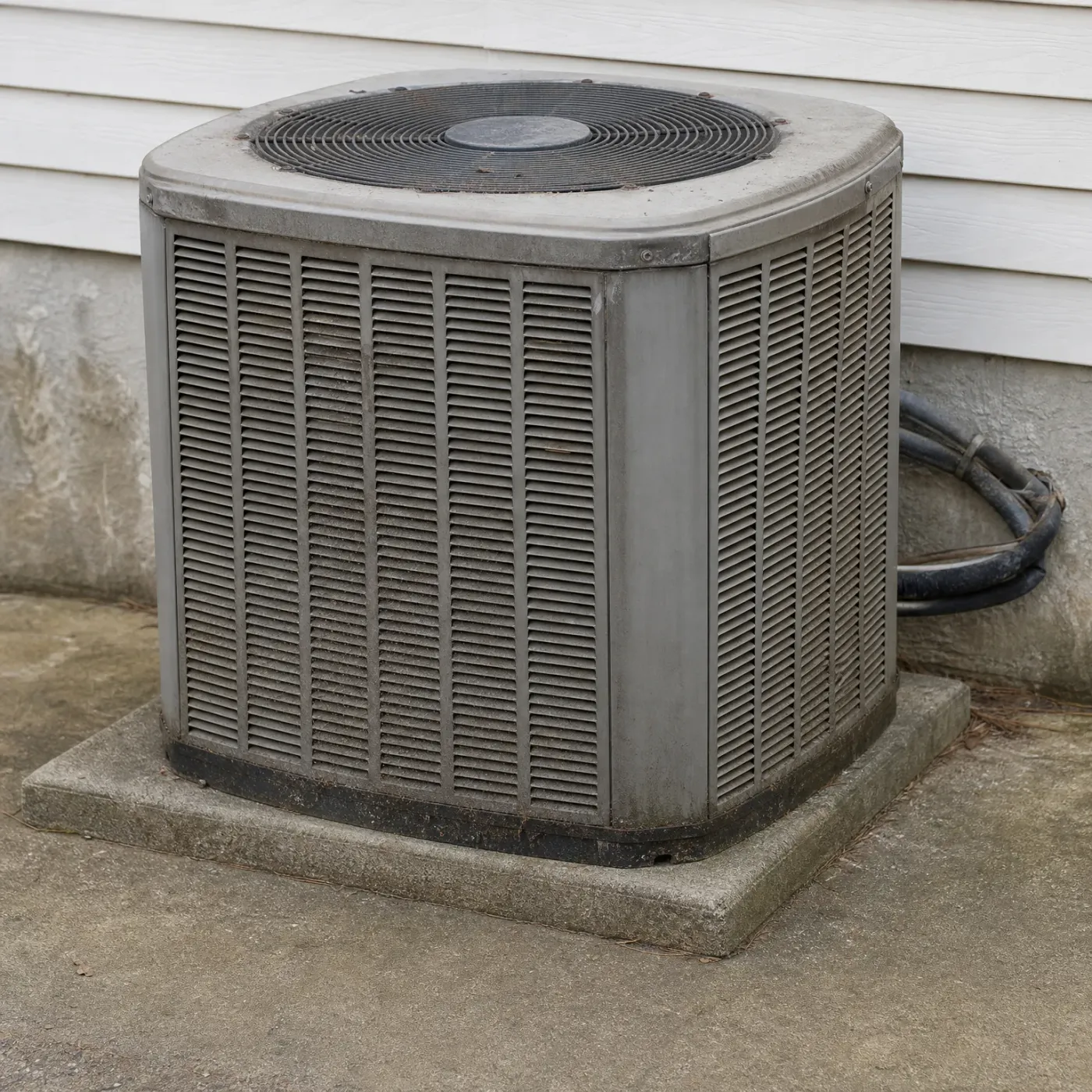
A gray outdoor air conditioner condenser unit on a concrete pad beside a house with beige horizontal siding, with an electrical disconnect box and insulated refrigerant lines on the wall and dry leaves on the ground.

Burning smell

Rust on the shroud and dirt packed into the fins mean the unit is working harder than it should to move air. That extra strain heats up the motor or wiring faster, and a burning smell is often the first sign something inside has started to give out.

Burning Smell: Safe or Not

Safe to run

  • A faint plastic smell for the first few minutes after you haven't run the AC in a while, then it clears up and doesn't come back.
  • Dust burning off the coils after the unit sat idle, common the first hot day you switch it on for the season.
  • The smell is mild, shows up once, and there's no smoke, no tripped breaker, and no warm air coming from the vents.
  • Nothing changes about how the system cools your house, and the air coming through the vents still feels cold.
  • You can trace the smell to something outside the AC itself, like a neighbor's grill or mulch in the yard.

Shut it off and call

  • The smell is sharp and electrical, like burning wax or hot plastic, and it gets stronger instead of fading.
  • You see smoke, scorch marks near the outdoor unit, or the breaker for the AC keeps tripping.
  • The air coming out of the vents is warm even though the thermostat is set low and the system is running.
  • The smell shows up every time you run the AC now, not just once after it sat unused.
  • You hear a new sound, a hum, a click, or a grinding noise, along with the smell.
  • The smell gets stronger the longer the system runs instead of staying the same or fading.
A woman with long light-brown hair in a gray knit sweater sits in a living room looking off to the side, with a sectional sofa, houseplant, lamp, wooden table and large windows behind her.
A woman in a chunky gray turtleneck sweater sits indoors looking off to the side, with a blurred dining table, chairs, pendant lamp and window behind her.
A woman in a cream knit sweater with her hair in a bun stands near a window, looking off to the side, with a gray sofa, houseplant and open kitchen with pendant lights blurred behind her.
A woman with long brown hair in a cream knit sweater stands near a window, looking to the side, with a white sofa, shelving, and a hallway visible behind her.

What's that smell doing to your house right now

If the smell is coming through your vents, it's riding on the same air that's filling every room you're trying to keep cool. You might notice it strongest in whatever room you're sitting in, or catch it near the thermostat when the system kicks on. A breaker that trips along with the smell means the system shut itself off rather than keep pushing power through whatever's wrong. Left alone, a wiring or motor problem that's already burning insulation doesn't fix itself with time off. It tends to get worse the next time the unit runs long and hard, which in Connecticut is most days from June through August.

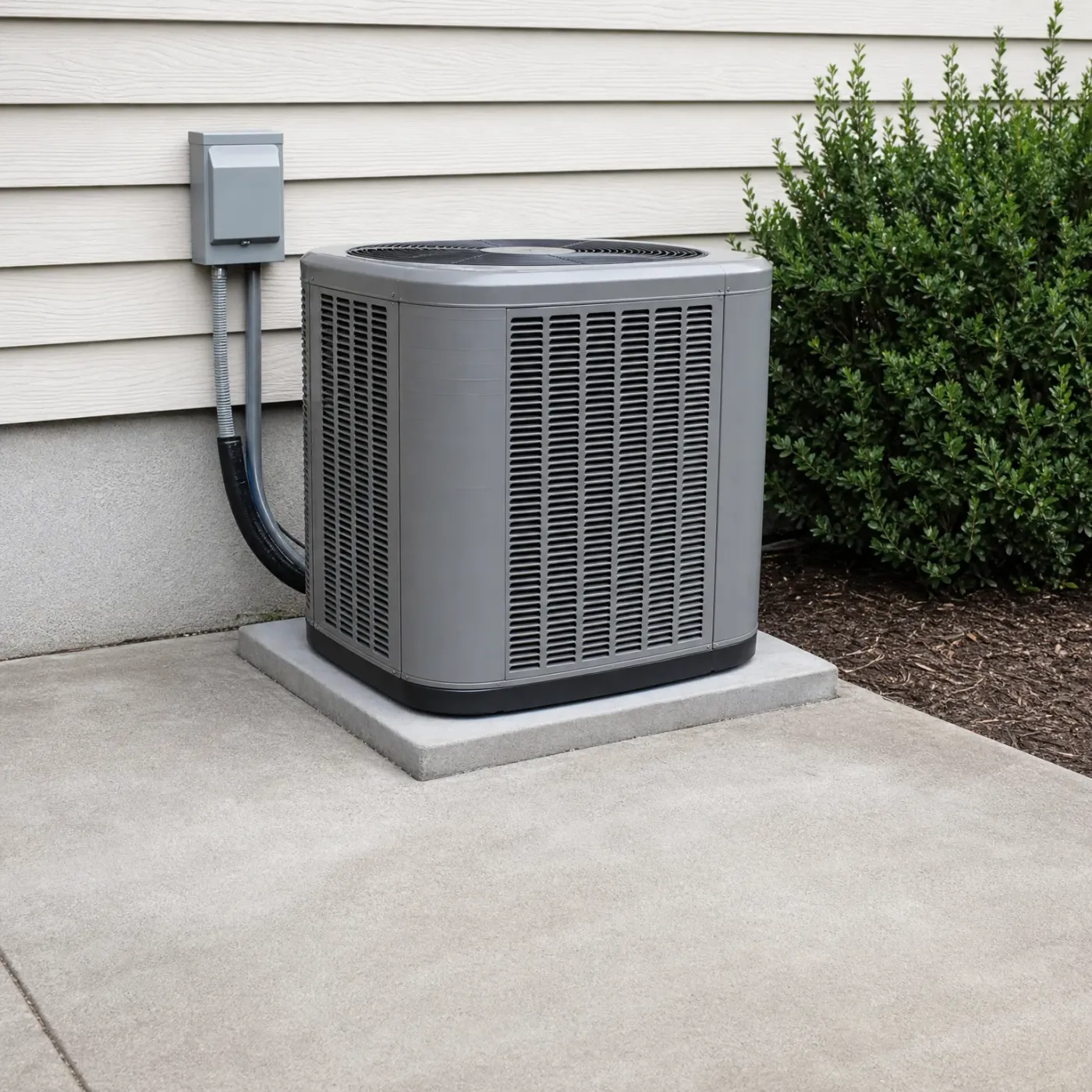
A gray outdoor air conditioner condenser unit on a concrete pad beside a house with light vinyl siding, with an electrical disconnect box and conduit on the wall and a leafy shrub with dark mulch to the right.

What a normal unit looks like outside

The condenser sits on its pad against the house, conduit and refrigerant lines running up to the disconnect box on the siding. The grille is clean enough that you can see through it. Nothing smells like anything, and the only sound is the fan turning.

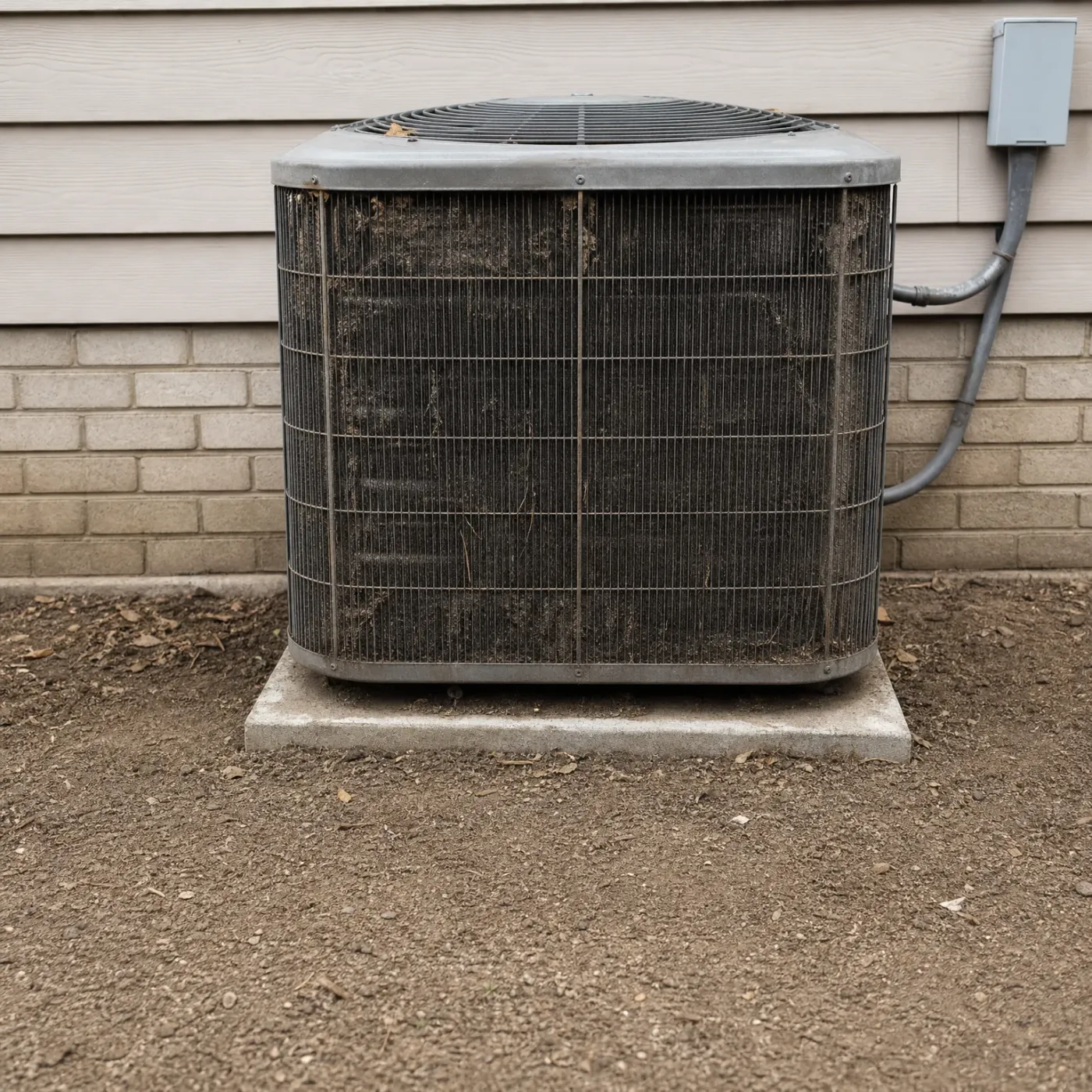
An outdoor air conditioner condenser unit on a concrete pad beside a house with horizontal lap siding, with a gray electrical disconnect box and conduit on the wall and a green shrub over pine-needle mulch at left.

What's happening in this one

The wire grille is caked with grime and weather, blocking the airflow the unit needs to shed heat. When a condenser can't breathe like that, the compressor and wiring behind the grille run hotter than they're built for. That's often where a burning smell starts.

A dirty outdoor air conditioning condenser unit on a concrete pad beside a house wall with horizontal siding above a painted brick foundation, with a gray electrical disconnect box and conduit on the wall.
Before you get your air conditioner repair
A gray outdoor air conditioning condenser unit on a concrete pad beside a house with horizontal lap siding, with a wall-mounted disconnect box and conduit to the left and a green shrub with mulch to the right.
After you get your air conditioner repair

It's off your list after this

A burning smell is not something to sit on, not in a Connecticut July with the whole house closed up and the AC running most of the day to keep ahead of the heat. Every hour it keeps running that way, whatever's heating up in there keeps heating up. What you need is someone who already knows what causes this in the units running around here, not a stranger learning your system on the clock. This goes to one licensed contractor local to you, someone who works on these condensers and air handlers every summer and has a good idea what's behind that smell before they even pull up. Not five companies competing for your callback, just the one who's going to actually look at it. Send the request and that search becomes someone else's job instead of yours, while your AC sits off and your house stays as cool as it already is.

Why the smell comes back every summer

A capacitor that's starting to go, or a motor bearing that's worn, doesn't usually fail all at once. It runs hotter than it should for weeks, and a Connecticut summer gives it no break to cool back down. The unit runs most of the day because the heat doesn't let up, so a part that's already stressed stays stressed. That's why the smell often shows up partway through the season rather than on the first hot day. The electrical insulation or the motor winding has been working past what it's built for the whole time, and the smell is what that finally produces.

Why waiting costs more than the repair

A burning smell almost always points to something electrical, a capacitor, a relay, a motor winding, and those parts don't fix themselves by running less. Running the unit anyway to keep the house cool pushes a failing part toward complete failure, and a part that fails completely can take the compressor down with it. A compressor is the most expensive part in the system to replace. With Connecticut power rates among the highest in the country, a motor or compressor working harder than it should also shows up on the electric bill before it ever shows up as a breakdown.

Power costs 29.31 cents per kilowatt-hour statewide

At 29.31 cents per kilowatt-hour, every hour your AC runs with a bad part costs more than it should. A failing motor or capacitor pulls harder to do the same job, and in Connecticut you pay for that extra draw at one of the highest rates in the country.

EIA-861 2025 statewide residential average

Where the smell actually starts

  • A contractor traces the smell to one of four places: the blower motor, the condenser fan motor, the wiring, or the circuit board.
  • An overheating motor often smells electrical, almost like hot plastic, before it ever trips a breaker.
  • Frayed wire insulation can short against the cabinet and burn in one spot, so the smell holds steady instead of fading.
  • A failing capacitor lets the motor it feeds draw more current than the windings are built for, and the windings heat up first.
  • On the circuit board, a burnt trace or relay gives off a sharp, sudden smell that usually shows up right when the system starts or stops.
  • A technician checks for scorch marks, melted insulation, and a burnt resistor smell with a meter before anything gets replaced.

A burning smell has to come from somewhere, and there's a short list of places a contractor checks first. The blower motor and the condenser fan motor both spin for hours at a stretch in a Connecticut summer, and a motor that's starting to fail runs hot before it ever shuts itself down or trips anything. That heat has a smell to it, close to hot plastic, and it's usually the first sign something's wrong before the unit stops cooling altogether. Wiring is next. Insulation that's worn through can short against the metal cabinet and burn in that one spot, which is why that smell tends to sit there instead of coming and going. A capacitor plays into this too. Its job is to keep the motor's current steady, and once it weakens, the motor pulls more current than its windings were built to handle, so the windings heat up first and the smell follows. The circuit board is the last stop, and it smells different, sharper, and it shows up right as the system kicks on or shuts off rather than lingering the way a motor or wiring smell does. A technician works through this with a meter, looking for scorch marks and melted insulation and checking for a burnt resistor before swapping anything out, because the smell tells you something's wrong but not which part it is until it's traced.

An outdoor air conditioning condenser unit on a concrete pad beside a house with horizontal lap siding, with an electrical disconnect box and conduit on the wall and a green shrub to the right.
A clean condenser like this one pulls in air freely, so nothing inside it runs hot enough to smell like anything.
An outdoor air conditioner condenser unit on a concrete pad beside a house with horizontal siding and a lower concrete foundation wall, with coiled refrigerant lines at right.
A unit this dirty traps heat against the fan motor and wiring, and that's when you start smelling it indoors.
A single-story house with gray vinyl siding, dark shingled gable roofs, and white-trimmed windows, set behind a partly dry green lawn under a clear blue sky.

A summer dew point of 61°F is what climate records show for where homes sit in Connecticut, averaged across June, July and August. That's heavy, sticky air, the kind that makes your AC pull moisture out constantly just to keep the house feeling right, not just cool it. A motor or capacitor that's already running hot gets no relief from air like that. It can't shed heat into air already thick with moisture, so it stays hot longer, and that's when you start to smell it indoors, usually in whatever room you're sitting in with the vents running.

NASA POWER T2MDEW county cells weighted by homes

A woman with her hair in a bun holds a sleeping young child against her chest, both wrapped in a textured beige knit blanket on a sofa in a dimly lit room with a lamp, framed picture, and bookshelf behind them.
A smiling older woman with gray hair in a cream knit sweater stands in a dimly lit kitchen beside a window showing snow outside, with a round loaf of bread on the counter in the foreground.

A burning smell from your AC always traces back to something specific, a motor running hot, wiring that's frayed, a circuit board under strain, and it won't fix itself by running the unit less. The part causing it needs to be found and replaced before it takes anything else out with it. A local contractor who works on these systems all summer has likely seen this exact smell on a dozen other units this season and knows which of the four usual spots to check first. You'll be matched with one contractor, not several, so you're not fielding calls all afternoon trying to sort out who to trust with it. That's someone who knows your area's systems, not a stranger reading off a troubleshooting script. Once your request goes in, the work of tracking someone down is off your plate. You'll know who's coming and what they're looking at before they ever touch the unit.

Sunlit corner of a room with a wooden sideboard holding a ceramic vase of olive branches and a dark wooden bowl, beside a white-framed window, a hardwood floor and woven rug.
A wooden cabinet holding a pale ceramic vase with leafy branches stands beside a beige wall in a sunlit room with hardwood floors, a jute rug, and a window showing green foliage outside.
Sunlit room corner with a beige upholstered sofa holding a rust-brown cushion, beside floor-length linen curtains at a window, over a wood floor with a woven rug.
Corner of a room with beige walls, a framed photograph, a floor-length linen curtain beside a window, an upholstered armchair with a knit pillow, white baseboards and trim, wood flooring and a pale rug.
Sunlit living room corner with a beige upholstered armchair with a cushion, linen curtains beside a wooden-framed window, green vertical panelled wall with a framed print, and a wooden table edge over a woven rug.

Hand off the search today

The pro who reaches out is licensed in Connecticut.

Reach a local pro

You're not committing to anything by asking.