Profile view of a bearded man wearing a black baseball cap and a dark gray T-shirt against a plain light background.

Do you need a dehumidifier with AC in Connecticut

Step 1 of 3: Equipment

Most of the time, yes. Connecticut summers run humid from June through September, and an air conditioner alone only handles part of that moisture. An AC is built to cool the air, and it pulls some water out as it runs, but it cycles on and off based on temperature, not humidity. On a mild, sticky day it might reach the thermostat setting and shut off before it has pulled enough moisture out of the air. That leaves a house that feels cool but clammy, with damp air around windows, musty closets, or condensation on pipes and glass. A dehumidifier runs on its own schedule, tied to moisture rather than temperature, so it keeps working through the stretches when the AC isn't. Whether you need one depends on how humid your house gets and how it's built, but in a state where summer humidity is the norm rather than the exception, pairing the two is how most homes actually stay dry and comfortable.

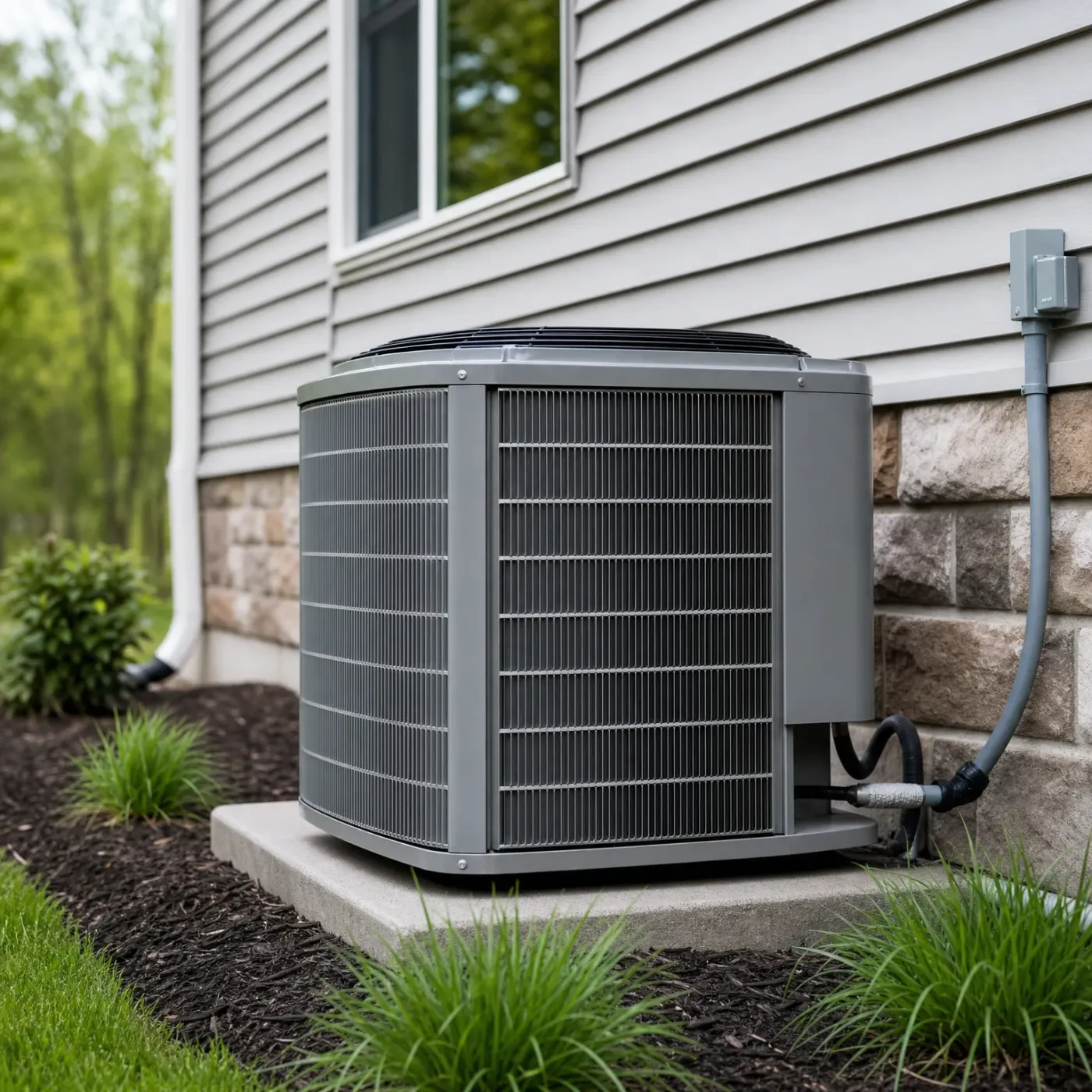
A gray outdoor air conditioner condenser unit on a concrete pad beside a house with horizontal vinyl siding, surrounded by mulch, flowering shrubs, and lawn.
Your AC cools the air and the coil stays clean enough to shed the moisture it pulls out of it.
A weathered outdoor air conditioning condenser unit on a concrete pad beside a house with light horizontal siding, an electrical disconnect box and conduit on the wall, and mulched soil on either side.
Once grime coats the fins, the unit struggles to pull heat out, let alone the humidity.

Why does your house feel damp even when the AC is running

You set the thermostat to 72 and the room gets there, but the air still feels heavy. Floors feel cool and a little tacky. Windows fog at the edges in the morning. Towels in the bathroom take longer to dry. Wood doors stick in their frames. That's moisture the AC never pulled out, because it shut off once the temperature hit the mark, not once the air felt dry. Left alone through a full Connecticut summer, that extra moisture gives mold and mildew what they need to take hold in closets, basements and anywhere air sits still, and it can work on wood trim and furniture over time.

A gray-haired bearded man in a dark coat and scarf dusted with snow stands smiling in a dimly lit entryway with a white front door, a side table with a lit lamp, an oval mirror, and a patterned rug.
An older bearded man in a dark snow-dusted coat and gray scarf stands just inside a dimly lit home entry, with a framed picture, lit table lamp, and an adjoining room with a fireplace behind him, and snow visible through the open door.
A gray-haired, bearded man in a dark snow-dusted coat stands smiling in a dimly lit entry hall with a staircase, a lit table lamp, a framed picture, and a living room visible through a doorway.
An older man with gray hair and a beard, wearing a dark jacket dusted with snow, stands smiling in a dimly lit hallway with lamps and a living room visible behind him.
A man seen from behind raises his hand to wave at a woman standing in the open front doorway of a single-story house with gray shingle siding, white columns and a gabled porch entry.

What your AC is actually doing when it runs

An air conditioner pulls humidity out of the air as a side effect, not as its job. Warm air moves across the cold evaporator coil, the moisture in it condenses on that coil, and it drips down into a drain line and out of the house. That only happens while the compressor is running. Once the thermostat is satisfied, the compressor shuts off, and any moisture still in the air stays there. On a mild day that's a short cycle and not much gets pulled out. A dehumidifier works differently. It runs on its own schedule, set to a humidity target instead of a temperature, so it keeps working the air between AC cycles instead of waiting for the next one.

A contractor who comes out to look at your system can tell you whether your ducts and your AC's run time are pulling enough moisture out on their own, or whether a dedicated dehumidifier tied into the ductwork would close that gap. That's a judgment made standing in your house, not from a general rule, and it's the kind of thing worth having someone look at directly.

A gray upholstered sofa with a textured cushion sits beside a dark round side table holding a vase of green foliage, with a table lamp and sheer-curtained window behind.
A gray outdoor air conditioner condenser unit on a concrete pad beside a house with horizontal lap siding, with a wall-mounted disconnect box and conduit to its right and shrubs to the left.

The AC is keeping up

The unit cycles on, cools the house, and shuts off once the thermostat is satisfied. The coil stays clear so it can shed the moisture it pulls out of the air along with the heat. The pad is clean, the conduit is tight, and the shrubs nearby have room to breathe.

An outdoor air conditioning condenser unit on a concrete pad beside a house with horizontal lap siding, with a conduit and electrical disconnect box on the wall at right.

The AC is falling behind

Dirt has built up on the coil guard over time. A coil caked with grime can't pull heat out of the air the way it should, and it pulls even less moisture. The house stays sticky no matter how long the unit runs, because the part doing the work can't do it anymore.

A woman wrapped in a thick beige fleece blanket sits on a sofa with an open book on her lap, beside a lit table lamp, with a frost-covered window behind her.
A gray-haired woman in a cream knit sweater stands in a dimly lit kitchen at night, looking to her right, with a round loaf of bread in the foreground and a dark window and potted plant behind her.
A gray outdoor air conditioner condenser unit on a concrete pad beside a house with horizontal siding and a stone veneer foundation, surrounded by mulch, ornamental grasses, and shrubs, with a conduit and disconnect box on the wall.

A pro who works on air conditioners

Once you send the form, finding a pro is off your list.

Get in touch with a local installer about a new air conditioner.

Hand it off

It costs nothing to send, and you don't have to hire anyone.

Why does my AC shut off before the room actually feels dry

You watch the thermostat click off at 72 and figure the room is done. But the air still feels wet, and ten minutes later the unit kicks back on anyway. It seems like it should be satisfied. Understanding why the shutoff happens before the house feels dry tells you something about what the thermostat is actually measuring, and what it isn't.

The thermostat reads temperature, not moisture

A thermostat has one job: watch the air temperature and stop the AC once that number is hit. It has no way to measure humidity at all. So the unit can satisfy the thermostat on a muggy July day in Connecticut while the coil has only pulled out part of the water vapor in the house. The compressor shuts down, the coil stops condensing moisture, and whatever humidity was still in the air stays there. That's why a room can read 72 on the wall and still feel sticky. The AC did what it was told to do. It just wasn't told to do anything about the moisture.

An outdoor air conditioner condenser unit on a concrete pad beside a house with light gray vinyl siding, with a gray electrical disconnect box and conduit on the wall, gravel beds and dried plants nearby, and a concrete sidewalk in the foreground.
Before you get your air conditioner installation
A gray outdoor air conditioning condenser unit on a concrete pad beside a house with horizontal siding and a stone veneer base, with a wall-mounted disconnect box and conduit, next to a shrub bed and a concrete patio.
After you get your air conditioner installation

What a dehumidifier actually removes

A whole-home dehumidifier pulls moisture out of the air on its own cycle, separate from your thermostat. It doesn't wait for the AC to call for cooling. It runs when the humidity in the house crosses a set point, pulling pints of water out of the air even on a mild, overcast day when your AC barely kicks on. That's the gap an AC alone leaves in Connecticut from June through September, when the air stays heavy even on days the temperature doesn't climb high enough to run the compressor much.

What happens if you skip it

Without one, the house depends on the AC's run time to pull moisture out, and run time depends on temperature, not humidity. A mild 74 degree day with heavy air might only get you a few short cycles, nowhere near enough to dry the house out. Wood floors and trim can take on moisture they don't release until the air dries out again, and a sticky house makes mold a bigger risk in bathrooms, closets and basements. None of that shows up on the thermostat.

Power costs 29.31 cents per kilowatt-hour statewide

At 29.31 cents per kilowatt-hour, every extra hour your AC runs chasing humidity instead of temperature shows up on the bill. A dehumidifier does that moisture work on its own cycle, so the AC can shut off when the room is actually cool instead of grinding on to dry out the air too.

EIA-861 2025 statewide residential average

Cooling and drying are separate jobs

  • An air conditioner alone can keep a Connecticut house cool without ever getting it dry, because cooling and dehumidifying are two different jobs.
  • A dehumidifier runs on its own cycle, pulling moisture out whenever the air crosses a set point instead of waiting for the thermostat to call for cold.
  • That split matters most from June through September, when the air outside stays heavy for weeks at a stretch.
  • Letting a dehumidifier handle the moisture means the AC shuts off when the room is actually cool, not just when the thermostat is satisfied.
  • At close to 29 cents a kilowatt-hour, every hour the AC runs chasing humidity instead of temperature adds up on the bill.
  • Once you send the form, you're done looking. A contractor who installs these systems reaches out to you directly.

Your air conditioner is built to cool the air. It pulls out some moisture along the way, but only as a side effect, and only while it's running. In a Connecticut summer, that's not enough on its own. The air stays heavy from June through September, and a thermostat that's satisfied at 72 doesn't know or care whether the house still feels damp. A dehumidifier works differently. It has its own cycle, tied to a humidity level rather than a temperature, so it keeps pulling moisture even after the AC has shut off. That's the whole difference between a house that's cool and a house that's cool and dry.

It also changes how hard the AC has to work. Without a dehumidifier, the AC ends up doing two jobs at once, and it can only really do one. It cycles longer trying to chase humidity it isn't built to fully remove, and every extra hour of runtime costs something at close to 29 cents a kilowatt-hour. With a dehumidifier handling moisture on its own, the AC gets to do what it's built for and shut off once the room is actually cool.

If this sounds like your house, the next step isn't research. Send the form, and a contractor who installs these systems will reach out to you directly. Figuring out what your house needs stops being something you have to sort out alone.


A wooden front door with six small glass panes and a narrow sidelight, set in a shingled house entry with white trim, reached by stone steps flanked by a planted urn with purple flowers and leafy branches in the foreground.
Exterior corner of a house with beige horizontal lap siding and a black-framed window, with white hydrangeas, ornamental grasses and low plantings along a flagstone patio.
Corner of a house with tan lap siding and a window, a brick step edge, flowering white hydrangeas and green shrubs beside a flagstone walkway leading to a white picket fence and a tree in backlit sunlight.
House exterior with cream horizontal lap siding, a dark-framed window, a black wall lantern beside a wood door, potted shrubs on stone steps, and white and pink hydrangeas in the foreground garden.
Corner of a cream lap-sided house with a white-framed window and dark shingled roof, beside a white-flowering hydrangea shrub, a clipped hedge, mulched bed and lawn.

Get your air conditioner to the right pro

After you send the request, you're done searching.

Hand off the search

No charge to send it. You decide if you hire them.